The True Origins of Valentine’s Day: A Love Story Rooted in History
- Fiore Pedale

- Feb 4
- 3 min read
Updated: Feb 11

Have you ever wondered how the actual Valentine's Day history began?

The Ancient World Before Valentine’s Day:
In ancient Rome, Lupercalia, a fertility festival celebrated from February 13 to 15, marked the middle of February long before chocolates and cards.
The sole purpose of celebrating Lupercalia was to 1) welcome spring, 2) promote fertility, and 3) purify the city. Instead of being romantic, the rituals were earthy and symbolic, focused more on population, crops, and survival than on love as we know it. This is significant because Valentine's Day eventually took the place of this celebration, maintaining the date but altering its significance.
There were several early Christian martyrs named Valentine. The most well-known tale revolves around Saint Valentine.
The first Valentine message ... as the story goes:
In Rome during the 3rd century, Valentine had been a Christian priest. Back then, it was against the law to be a Christian. Valentine secretly married couples who were in love. The reason for his secrecy was that the Emperor of Rome, Claudius II, is said to have banned marriages for young soldiers because he believed single men were made to be better fighters. When Valentine was discovered secretly marrying couples, he was arrested and imprisoned.
It seems there is a long-lasting story that says while in prison, Valentine made friends with the jailer's daughter. He sent her a note before he was put to death (around February 14, AD 269) that said, “From your Valentine.”

This story, whether true or not, put the idea of romantic love linked to sacrifice and devotion in people's minds. This idea became a big part of the holiday's identity. Valentine was executed and later canonized as a saint.
The Church Gets Involved
By the late fifth century, the Christian Church sought to replace pagan festivals with Christian observances.
In AD 496, Pope Gelasius I officially declared February 14 as St. Valentine’s Day, effectively replacing Lupercalia with a feast honoring Valentine. At this stage, the day was more about religion than love.

Love Comes into the Picture
The romantic connection came much later, in the Middle Ages, mostly in England and France. People believed birds began mating around February 14; therefore, it must be a day connected to love.
Poets welcomed the idea. The most influential writer was Geoffrey Chaucer (14th century), who described Valentine's Day as a time when lovers come together. His poetry helped cement the concept of courtly love, chosen affection, and romantic destiny.

Valentine Cards: Their Ascension—By the 1700s–1800s
Handwritten notes and poems were exchanged between lovers; hearts, cupids, flowers, and lace became prevalent symbols.
During the Victorian era, mass-produced Valentine cards appeared, and elaborate floral arrangements, sentimental messages, and intricate designs became increasingly popular.
This is the moment when Valentine's Day develops its familiarity.
Valentine's Day in the Modern World
By the 20th century, people had commercialized the holiday by gifting chocolates, roses, jewelry, and greeting cards to their loved ones.
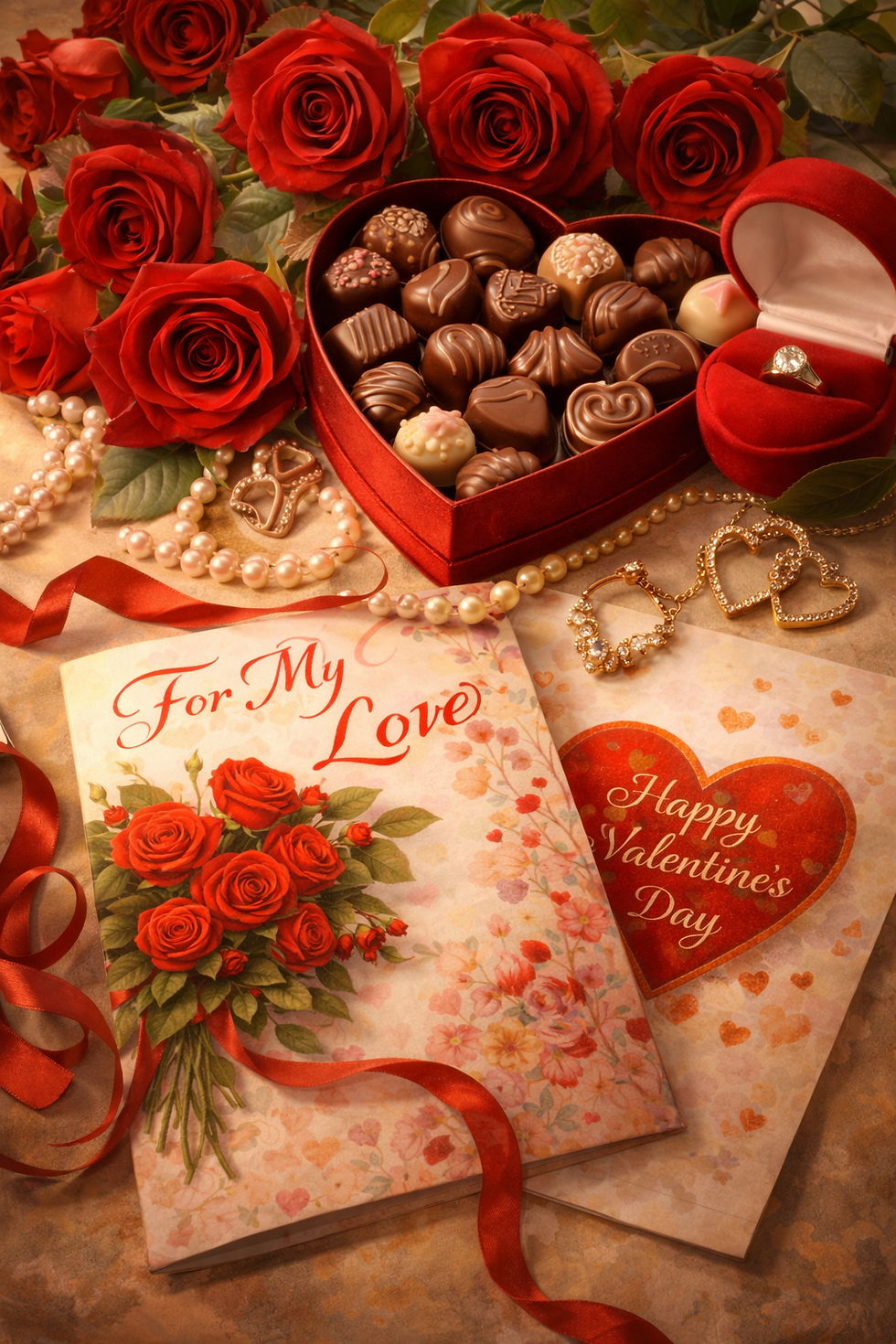
However, beneath the commercialization, the core themes remained: love, devotion, and choosing someone intentionally.
Valentine’s Day is a blend of:
Ancient fertility rituals
Christian martyr legends
Medieval poetry
Victorian sentimentality
It progressed over time from survival and fertility ~ faith and sacrifice ~ romance ~ emotional connection.
Valentine’s Day has always been about more than a single date on the calendar. From whispered vows in ancient Rome to handwritten notes exchanged across centuries, love has endured through words meant to be kept. In a world that moves quickly and speaks digitally, a handwritten note still carries a rare kind of intimacy—one that can be held, reread, and treasured. My floral notecards are created with that tradition in mind, blending botanical beauty with the quiet power of written words. Whether you’re celebrating love, friendship, or simply a moment worth remembering, these notecards invite you to slow down and say something meaningful—beautifully, thoughtfully, and from the heart.


Comments